Tom Navidson
House of LeavesTom Navidson is Will Navidson’s fraternal twin brother and one of the few people able to bridge the distance between Will’s controlled ambition and the ordinary, frightened human world that the house threatens to destroy. Initially presented as an estranged, seemingly unserious relative, Tom gradually becomes a figure of endurance and protection: he remains at the radio despite terror, records his mental struggle on Hi 8, and ultimately rescues Daisy when panic overtakes the household.
Identity and Background
Tom and Will have barely spoken for more than eight years before Tom’s arrival. Karen Green explains the source of the estrangement as a long-standing resentment sharpened by their divergent fortunes: Will is successful, while Tom is not. Their relationship had been different during childhood, when the twins looked after each other more closely, but adulthood has replaced that mutual care with silence and emotional avoidance.
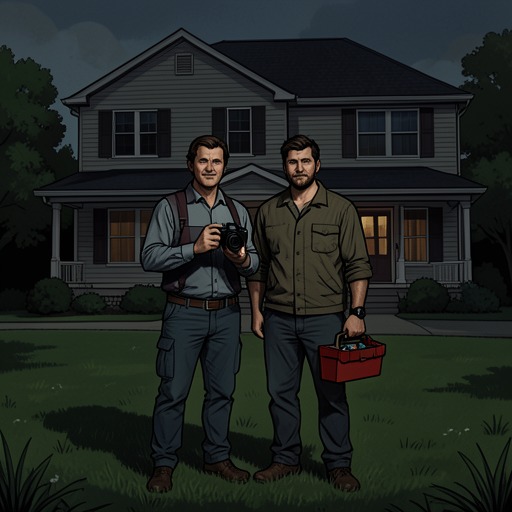
Tom arrives after Will calls him at four in the morning to ask for his tools. Karen greets him with a large hug and a Hi 8, while the children immediately respond to his affability, his enormous physical presence, and his ability to amuse them. His McDonald’s french fries make him especially popular with the children, establishing him as a genial domestic presence rather than an intimidating intruder. Tom’s own account of the call treats its absurdity humorously: his brother, absent for years, suddenly needs equipment from him in the middle of the night.
Character and Contrast with Will
Tom appears content with simple comforts: a game on television and a soft place from which to watch it. Will, by contrast, exercises every day, reads large quantities of esoteric criticism, and filters the surrounding world through photography. The contrast is framed as a difference between existing and striving. Tom gets by; Will must succeed. Tom wants merely to be, while Will feels compelled to become.
The apparent opposition between the brothers does not erase their kinship. Beneath Tom’s wide grin are deep pools of sorrow, and the same sorrow can be seen in Will’s eyes. Their resemblance therefore lies less in behavior than in an inward vulnerability that both men conceal differently. Tom’s humor and Will’s discipline become opposing defenses around the same familial wound.
Tom also refuses to submit entirely to Will’s judgment. In the backyard, he smokes marijuana even though he knows Will disapproves. Will says nothing, and Tom does not change his behavior to placate him. Their body language, avoidance of direct eye contact, and the strained spaces between their words show that the eight-year silence remains active in the present. Tom’s casual remark that he has become an acquaintance of Billy Reston and has gone more than two years without alcohol gestures toward a history of substance use while also presenting his sobriety as an accomplished fact.
The House and the Discovery
Tom’s presence briefly creates the possibility of fraternal healing, but that possibility is displaced by the house’s impossible geometry. Tom discovers that Will’s measurement is wrong: the interior exceeds the exterior not by one quarter of an inch but by five sixteenths of an inch. The discrepancy cannot be reconciled through ordinary calculation. Legal pads, napkins, and newspaper margins fill with notes and equations, yet the fraction remains inexplicable.
This discovery gives Tom a practical role in confronting the anomaly. The brothers’ conflict is no longer only emotional; it is materialized in a measurement that refuses to balance. The impossible fraction attacks the assumption that the universe adds up, turning Tom’s tool-oriented practicality into an encounter with a reality that no tool or equation can contain.
Loyalty in the Darkness
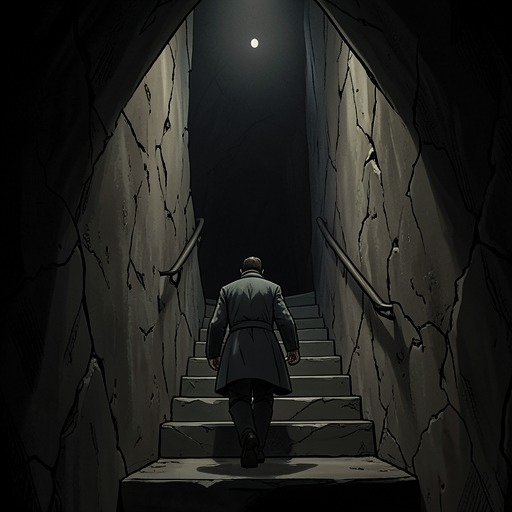
During the ordeal in the house, Tom experiences the place’s terror directly. By the end of the first night, the strain has become so severe that he threatens to abandon his post. He nevertheless remains beside the radio. His fear does not disappear, and his endurance is not presented as effortless courage; rather, devotion to Will outweighs the impulse to flee.
The record of this struggle survives on Tom’s Hi 8. The resulting material, identified as “Tom’s Story,” preserves a history of thoughts passing through the darkness, sometimes funny and sometimes bizarre. The recording makes his interior resistance available without converting him into a conventional heroic narrator. His humor continues to operate under pressure, but it now functions alongside fear, boredom, and devotion.
Protection and Narrative Significance
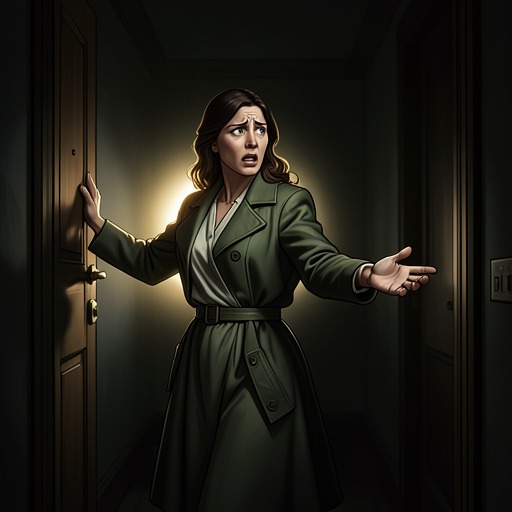
Tom’s most direct act of protection occurs when Daisy Navidson becomes trapped in the house during the family’s panic. Daisy stops screaming because Tom reaches her. He makes his way through the heaving house to the upstairs hallway, finds the terrified five-year-old frozen in the shadows, and lifts her without speaking. Rather than follow the route Will took toward the precipitous drop into the living room, Tom races back to the first floor by way of the rear of the house.
This rescue crystallizes Tom’s importance. The man previously defined by failure, weight, amusement, and domestic ease becomes the person who acts when a child cannot describe what she has seen and the adults are consumed by evacuation. His value is not measured by Will’s standards of achievement. It appears in persistence, emotional availability, and the instinct to carry someone vulnerable out of danger.
Tom therefore embodies the return of brotherhood and family care under extreme pressure. His relationship with Will begins in resentment and estrangement, but his conduct demonstrates that the older bond between the twins has not vanished. The house exposes the limits of measurement, control, and self-protective distance; Tom answers that exposure not with mastery, but with loyalty and rescue.